Printable Dental Referral Forms make it easy to share patient details, the reason for referral, contact information, preferred contact method, scheduling notes, and any guardianship or insurance references when needed. This beginner-friendly guide explains exactly what these forms are, who uses them, and how to print and prepare them for quick, accurate referrals.
Printable Dental Referral Forms are structured sheets that capture patient details, the reason for referral, contact information, preferred contact method, scheduling notes, and any guardianship or insurance references when needed. They help clinicians quickly relay essential data between offices, specialists, and administrative staff, ensuring everyone sees the same information at the same moment, which reduces back-and-forth phone calls and confusing messages.
By using a standard form, you reduce miscommunication, save time during busy days, standardize terminology, and create a detailed paper trail for future follow-ups, audits, and patient records. Even new staff can use them confidently after a short walkthrough, and experienced teams can rely on them to maintain consistency across clinics, practices with shared records, and partner organizations.
What They Include
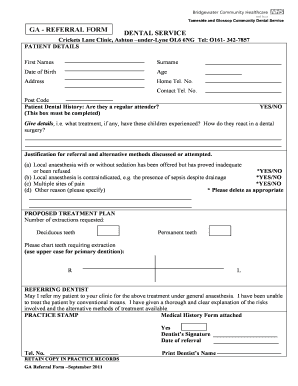
Most Printable Dental Referral Forms feature fields for patient name, date of birth, contact details, and a preferred method of communication in case follow-up questions arise. They also offer space to note the referring dentist, the receiving specialty, and the setting of the referral, whether it is a routine check, a specialist consultation, or an urgent care scenario that requires faster action.
Some forms ask for a brief medical history or allergies to guide care, and many allow room for a short note about symptoms, pain level, or recent treatments. Templates are designed to be easy to fill in, with clear labels, ample spacing, checkboxes, and hints in light type to prevent errors even on a busy day.
Audience and Uses
Audience for Printable Dental Referral Forms includes dental offices, pediatric clinics, school nurses, and caregivers who coordinate care across different settings and schedules. They are especially helpful when multiple specialists are involved, such as an orthodontist, a periodontist, or an oral surgeon, because the form serves as a central reference point that everyone can consult. Teachers and school health staff may use them when a student needs a dentist's evaluation or treatment plan communicated to families, and school administrators appreciate a simple document they can attach to student records.
Having a ready template saves steps and helps everyone stay on the same page, from front desk to clinician, and even when care is coordinated remotely.
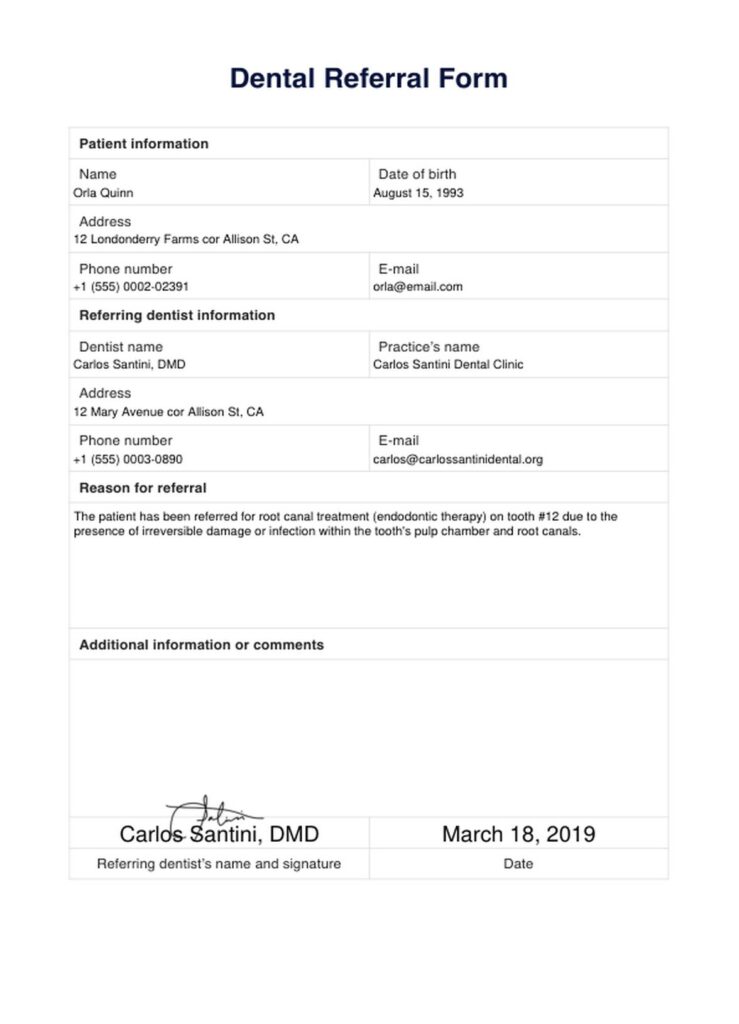
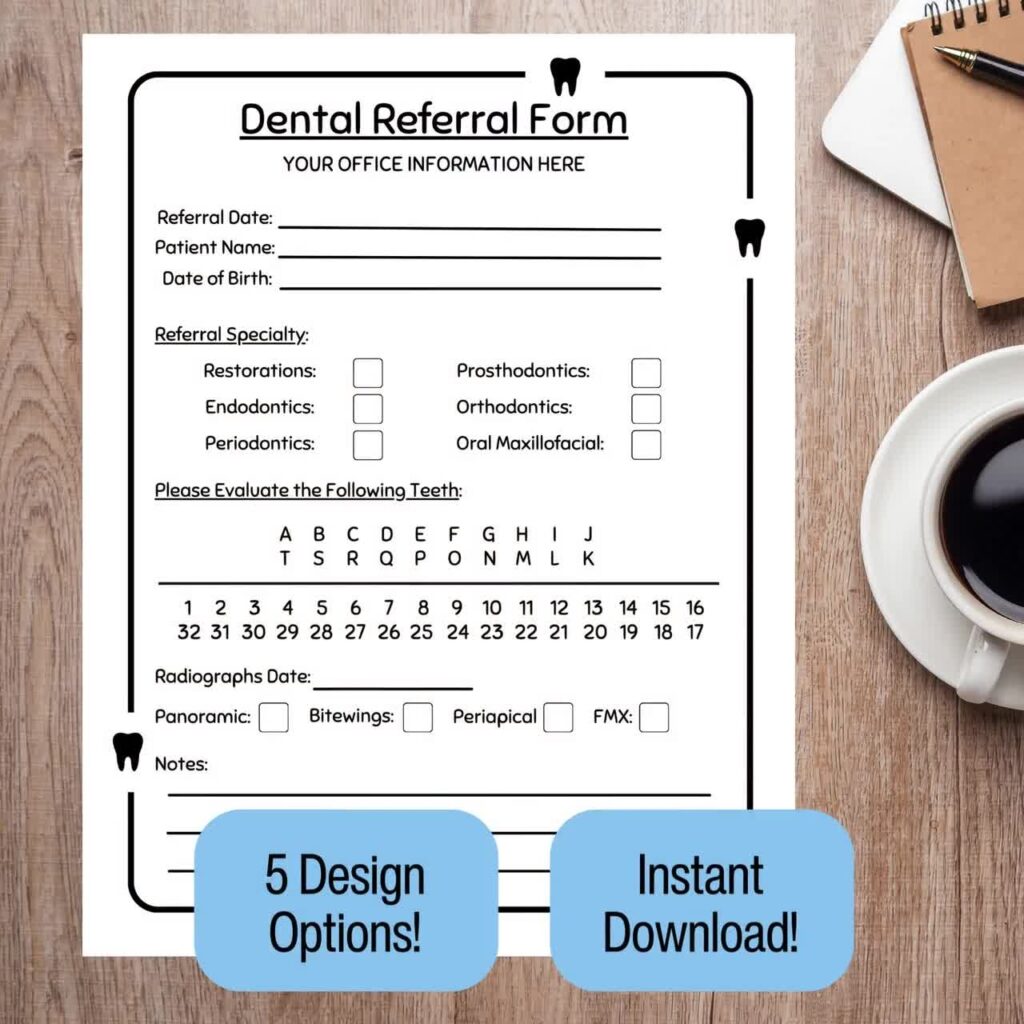
To use them well, keep a master supply of forms in consistent templates and store them in a visible, easy-to-reach spot near the front desk. Fill out the forms clearly, using legible handwriting or tidy typed text for consistency, and encourage staff to double-check entries before sending to the next office. Include only the necessary information and attach any supporting notes or documents so the recipient has what is needed to plan care, from initial assessment to follow-up scheduling.
Consider laminating a few forms for reuse with dry-erase markers or keeping digital copies for quick updates when patient details change.
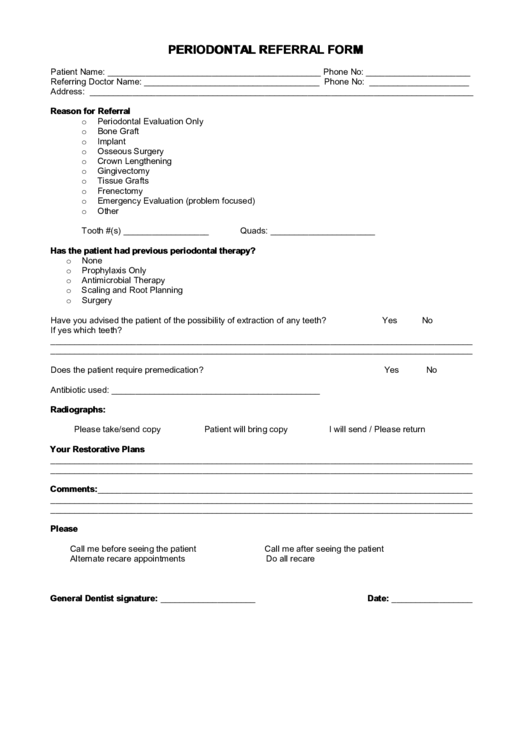
When families and clinics adopt Printable Dental Referral Forms, referrals become faster and more reliable, helping patients move through care without repeated phone calls. They reduce missing information, clarify expectations, and help track progress across visits, from initial intake to final treatment notes, creating a smoother patient journey. Start with a simple template and invite feedback from colleagues to improve it, so the form fits real workflows in everyday practice. With steady use, any clinic can adopt these forms confidently, share essential details clearly, and build consistency across teams.